
Vitamin D Deficiency in Canada: Symptoms, Testing and Supplementation
Do you feel constantly tired, experience muscle aches, or notice that your energy levels decrease during the winter months? Vitamin D deficiency is an important nutritional concern in Canada, particularly during the fall and winter months when sunlight exposure is limited. Vitamin D plays a crucial role in maintaining healthy bones, supporting muscle function, and regulating calcium absorption. At The Hope Naturopathic Clinic, Dr. Nazish Jawad, ND, provides individualized naturopathic consultations for patients experiencing nutritional deficiencies, fatigue, muscle discomfort, and other health concerns in Mississauga and Etobicoke, Ontario.
What Is Vitamin D and Why Is It Important?
Vitamin D is a fat-soluble vitamin that helps the body absorb calcium and phosphorus, which are essential for maintaining healthy bones and teeth. Vitamin D also contributes to normal muscle function and plays a role in immune system regulation. It helps prevent rickets in children and osteomalacia caused by vitamin D deficiency in adults. Severe or prolonged vitamin D deficiency can weaken bones and affect muscle function. However, vitamin D is not a cure for fatigue, depression, autoimmune disorders, or other chronic conditions.
Why Is Vitamin D Deficiency a Concern in Canada?
Canada’s northern latitude affects the amount of ultraviolet B (UVB) radiation available for vitamin D production in the skin. During the fall and winter, sunlight may be insufficient for meaningful vitamin D synthesis, particularly in many Canadian regions. Several factors can influence vitamin D status, including limited winter sunlight, spending more time indoors (indoor sunlight through ordinary window glass does not provide sufficient UVB radiation), clothing that covers most of the skin, skin pigmentation (melanin reduces the skin’s efficiency in producing vitamin D), older age, and limited dietary sources.
Because adequate vitamin D cannot always be obtained from sunlight and food alone, supplementation may be appropriate for some Canadians.
What Are the Symptoms of Vitamin D Deficiency?
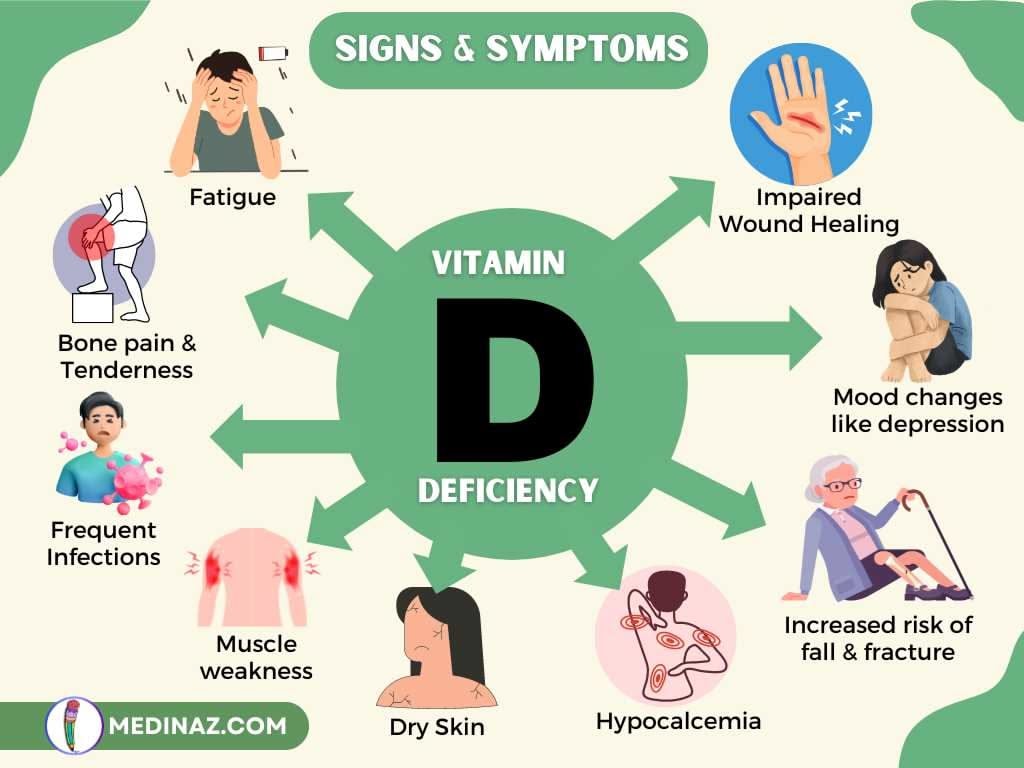
Mild vitamin D deficiency often causes no noticeable symptoms. When deficiency is more significant or prolonged, symptoms may include persistent fatigue and low energy, though fatigue has many possible causes including iron deficiency, thyroid disorders, vitamin B12 deficiency, sleep disturbances, depression, and chronic medical conditions. Low vitamin D should not automatically be assumed to be the cause of fatigue.
Vitamin D plays an important role in normal muscle function, and significant deficiency may contribute to muscle weakness, particularly in the proximal muscles of the hips and thighs. Some individuals may notice difficulty climbing stairs or rising from a seated position. Prolonged, severe vitamin D deficiency may lead to osteomalacia, a condition involving impaired bone mineralization, with symptoms including diffuse bone pain, tenderness, muscle weakness, difficulty walking, and increased susceptibility to fractures. Persistent bone pain requires medical evaluation.
Low vitamin D levels have been associated with depressive symptoms in some observational studies. However, an association does not prove that vitamin D deficiency causes depression, and clinical trials have not consistently shown that vitamin D supplementation treats depression. Persistent mood changes deserve appropriate assessment.
Who Is at Greater Risk of Vitamin D Deficiency in Canada?
Certain individuals have a higher likelihood of low vitamin D status, including older adults, people with limited sun exposure, individuals with darker skin pigmentation, people who routinely cover most of their skin, individuals with malabsorption disorders, people who have undergone certain gastrointestinal surgeries, individuals with obesity, people taking medications that affect vitamin D metabolism, and individuals with certain chronic kidney or liver disorders.
Because vitamin D is fat-soluble, disorders affecting fat absorption may contribute to deficiency. Examples include celiac disease, Crohn’s disease involving malabsorption, certain pancreatic disorders, some liver and biliary conditions, and malabsorption following bariatric surgery. Individuals with these conditions may require more individualized assessment and supplementation.
How Is Vitamin D Deficiency Diagnosed?
Vitamin D status is generally assessed using a blood test called 25-Hydroxyvitamin D [25(OH)D], which is the preferred blood marker for evaluating vitamin D stores. In Canada, results are usually reported in nanomoles per litre (nmol/L). The active vitamin D metabolite, 1,25-dihydroxyvitamin D, is not routinely used to assess vitamin D stores.
Commonly used bone-health thresholds include: below 30 nmol/L (risk of vitamin D deficiency), 30 to 49 nmol/L (may be inadequate for bone health in some individuals), 50 nmol/L or above (generally sufficient for bone health in most people), and above 125 nmol/L (may be associated with adverse effects). Higher vitamin D levels are not necessarily better, and there is no established benefit to routinely targeting very high blood concentrations.
Routine vitamin D screening is generally not recommended for every healthy adult without specific risk factors or clinical indications. Testing may be considered when there is concern about osteomalacia, significant malabsorption, certain metabolic bone disorders, unexplained fractures, or conditions affecting vitamin D metabolism. In Ontario, OHIP generally covers vitamin D testing only for specific medical indications rather than routine screening. Patients who do not meet OHIP criteria may need to pay privately for testing.
Vitamin D2 vs. Vitamin D3 and How Much Do Canadians Need?
Vitamin D supplements are available in two main forms. Vitamin D2 (ergocalciferol) is commonly derived from fungal or plant-related sources. Vitamin D3 (cholecalciferol) is generally more effective than vitamin D2 at increasing and maintaining serum 25-hydroxyvitamin D concentrations, though both forms can be used to improve vitamin D status. The appropriate formulation depends on individual needs, dietary preferences, and clinical circumstances.
Health Canada’s recommended daily intake is 600 IU for adults aged 19 to 70, 800 IU for adults aged 71 and older, and 600 IU during pregnancy and breastfeeding. These values represent recommended total daily intake from food and supplements for generally healthy individuals and are not the same as treatment doses for confirmed vitamin D deficiency. The established tolerable upper intake level for most adults is 4,000 IU per day. Higher doses may occasionally be prescribed for specific medical reasons under professional supervision, but long-term excessive vitamin D intake can cause toxicity.
Because vitamin D is fat-soluble, excessive supplementation can lead to elevated calcium levels in the blood (hypercalcemia). Possible symptoms of vitamin D toxicity include nausea, vomiting, constipation, excessive thirst, frequent urination, weakness, confusion, and kidney complications. Taking high-dose vitamin D without appropriate medical guidance is not recommended.
Food Sources of Vitamin D and Sunlight in Canada
Vitamin D is naturally present in a limited number of foods, including fatty fish (salmon, trout, sardines, mackerel), egg yolks, and UV-exposed mushrooms. In Canada, vitamin D may be added to cow’s milk, certain fortified plant-based beverages, margarine, and some other fortified products. A balanced diet can contribute to vitamin D intake, but some individuals may still require supplementation.
Sunlight can stimulate vitamin D production in the skin, but during much of the Canadian winter, UVB exposure is limited. Intentional unprotected sun exposure is not recommended as a strategy for correcting vitamin D deficiency because ultraviolet radiation increases the risk of skin cancer. Dietary sources and appropriate supplementation are safer, more reliable options.
Vitamin D and Women’s Health
During menopause, declining estrogen levels contribute to accelerated bone loss. Adequate vitamin D and calcium intake are important components of bone health, though vitamin D supplementation alone does not prevent all menopause-related bone loss or replace osteoporosis treatment when indicated. Women with additional osteoporosis risk factors may require bone density assessment and individualized care.
Vitamin D is important for maternal and fetal skeletal health during pregnancy. Pregnant individuals should meet recommended vitamin D intake through diet and appropriate supplementation, and high-dose vitamin D should not be used during pregnancy without medical guidance. Vitamin D status has also been investigated in relation to reproductive health, PCOS, and fertility outcomes, but current evidence does not establish vitamin D supplementation as a reliable treatment for infertility in individuals without deficiency.
Naturopathic Treatment for Vitamin D Deficiency in Mississauga and Etobicoke
At The Hope Naturopathic Clinic, naturopathic care focuses on identifying nutritional concerns, assessing relevant risk factors, and developing individualized recommendations. A consultation may include reviewing dietary vitamin D intake, supplement use, sun exposure patterns, medical history, digestive health, bone and muscle symptoms, current medications, risk factors for malabsorption, and previous laboratory results.
When supplementation is indicated, recommendations should consider age, dietary intake, risk factors, existing vitamin D levels when available, kidney function and relevant medical conditions, medication interactions, and other supplements containing vitamin D. The goal is to achieve adequate vitamin D status without unnecessary high-dose supplementation. Taking vitamin D with a meal containing some dietary fat may improve absorption.
Vitamin D and calcium work together to maintain bone health. Calcium supplements are not necessary for everyone and should be recommended based on individual intake and medical needs. If vitamin D remains low despite appropriate supplementation, possible contributing factors such as inconsistent supplementation, malabsorption, medication effects, or certain chronic medical conditions should be reviewed. Follow-up testing may be appropriate for patients receiving treatment for significant deficiency, those with malabsorption, or individuals with medical conditions affecting vitamin D metabolism.
Frequently Asked Questions About Vitamin D Deficiency in Canada
Why is vitamin D deficiency common in Canada?
Canada’s northern latitude limits UVB exposure during fall and winter. Reduced sunlight, indoor lifestyles, dietary intake, skin pigmentation, and other factors can contribute to low vitamin D levels.
What are the most common symptoms of low vitamin D?
Mild deficiency may cause no symptoms. More significant deficiency can contribute to muscle weakness, bone pain, and problems with bone mineralization. Fatigue and muscle aches are sometimes reported but are not specific to vitamin D deficiency.
Can low vitamin D cause extreme fatigue?
Some individuals with low vitamin D experience fatigue. However, severe or persistent fatigue may also result from iron deficiency, thyroid disorders, sleep problems, or other medical conditions. A comprehensive assessment may be needed.
What is a normal vitamin D level in Canada?
A serum 25-hydroxyvitamin D level of at least 50 nmol/L is generally considered adequate for bone health in most people. Interpretation depends on clinical circumstances and the guideline being used.
Is a vitamin D level of 30 nmol/L low?
A level of 30 nmol/L is near the lower end of commonly used bone-health thresholds and may indicate inadequate vitamin D status. Clinical interpretation should consider symptoms, medical history, and risk factors.
Is a vitamin D level of 50 nmol/L sufficient?
A level of 50 nmol/L is generally considered sufficient for bone health in most healthy individuals. Higher targets are not routinely necessary for everyone.
Should Canadians take vitamin D supplements during winter?
Vitamin D supplementation may be appropriate when dietary intake is insufficient, particularly for individuals at increased risk of deficiency. The appropriate dose depends on age, health status, and individual needs.
How much vitamin D should adults take daily in Canada?
The recommended total daily intake is 600 IU for adults aged 19 to 70 and 800 IU for adults aged 71 and older. These are general nutritional recommendations, not treatment doses for confirmed deficiency.
Is vitamin D3 better than vitamin D2?
Both forms can raise vitamin D levels. Vitamin D3 is generally more effective at increasing and maintaining serum 25-hydroxyvitamin D concentrations.
Should I take vitamin D3 with vitamin K2?
Vitamin K2 is not routinely required for everyone taking vitamin D3. Individuals taking warfarin or other vitamin K-sensitive anticoagulants should seek medical guidance before using vitamin K supplements.
Can vitamin D deficiency cause hair loss?
Some studies have found associations between vitamin D status and certain hair loss disorders. However, vitamin D deficiency is not an established cause of every type of hair loss. Hair thinning requires assessment of other possible causes.
Can low vitamin D cause depression or anxiety?
Low vitamin D has been associated with depressive symptoms in some studies. However, supplementation has not consistently demonstrated effectiveness as a treatment for depression or anxiety. Mental health symptoms should be appropriately evaluated.
Can vitamin D help with weight loss?
Vitamin D supplementation is not an established weight-loss treatment. Correcting a deficiency may support general health, but it does not reliably produce weight loss.
Can vitamin D deficiency cause back pain?
Severe deficiency causing osteomalacia may produce bone pain, including discomfort involving the back or pelvis. However, most back pain is caused by other conditions and should not automatically be attributed to vitamin D.
Is vitamin D testing covered by OHIP in Ontario?
OHIP generally covers vitamin D testing only for certain medical indications. Routine testing may require private payment. Patients should confirm eligibility and current laboratory fees.
Can I take 5,000 IU of vitamin D every day?
A daily dose of 5,000 IU exceeds the established tolerable upper intake level of 4,000 IU for most adults. Higher doses may be appropriate for selected patients under professional supervision, but they should not be used routinely without clinical justification.
How long does vitamin D supplementation take to work?
Vitamin D blood levels may increase over several weeks. When follow-up testing is indicated, reassessment is often considered after approximately 8 to 12 weeks, depending on the treatment plan and medical circumstances.
Where can I get naturopathic support for vitamin D deficiency in Mississauga or Etobicoke?
The Hope Naturopathic Clinic offers individualized nutritional and naturopathic consultations with Dr. Nazish Jawad, ND, at its Mississauga and Etobicoke locations. Care may include review of vitamin D results, nutritional assessment, appropriate supplementation recommendations, and evaluation of relevant health concerns.
Ready to Support Your Gut and Brain Health?
Book a complimentary 15-minute consultation with Dr. Nazish Jawad, ND to discuss your digestive health, mental well-being, or any concerns about the gut-brain connection — and discover a personalized naturopathic care plan.
Book an Appointment