
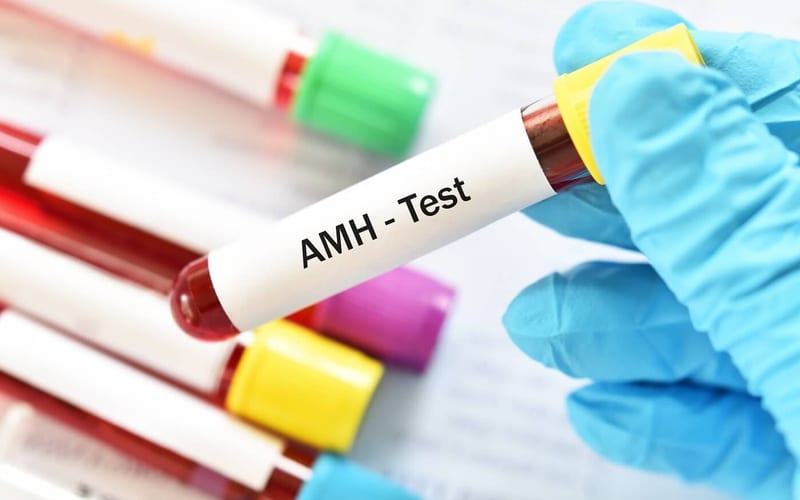
Low AMH Levels: Can You Still Get Pregnant Naturally?
Imagine receiving your fertility blood test results and discovering that your Anti-Müllerian Hormone (AMH) level is lower than expected. For many women, a low AMH result brings uncertainty, disappointment, and concern about their reproductive future. But here is an important and encouraging message: natural pregnancy is still possible with low AMH levels. AMH provides useful information about ovarian reserve, but it does not tell the complete story of your fertility. A woman with low AMH may still ovulate regularly, have healthy eggs, and conceive naturally.
What Is AMH and Why Is It Important?
Anti-Müllerian Hormone (AMH) is produced by granulosa cells in small, developing follicles within the ovaries. These follicles contain immature eggs. AMH testing helps healthcare professionals estimate a woman's ovarian reserve, which refers to the remaining pool of eggs in her ovaries.
Generally, higher AMH levels suggest a larger population of small developing follicles, lower AMH levels suggest a smaller population of these follicles, and AMH levels usually decline as women get older.
AMH is particularly useful when planning fertility treatments such as IVF because it helps predict how the ovaries may respond to stimulation medications. However, AMH is not a direct measurement of egg quality or a reliable standalone predictor of natural pregnancy.
What Is Considered a Low AMH Level?
AMH levels are commonly reported in either ng/mL or pmol/L. The interpretation depends on age, laboratory methods, and clinical circumstances. As a general illustration: above 3.0 ng/mL is considered a relatively high ovarian reserve marker; 1.0 to 3.0 ng/mL is commonly considered within a typical range; 0.5 to 0.9 ng/mL is a lower ovarian reserve marker; and below 0.5 ng/mL is a very low ovarian reserve marker.
AMH must be interpreted in context. For example, an AMH result of 0.8 ng/mL in a 28-year-old woman has different implications than the same result in a 42-year-old woman. Your age, menstrual cycle, medical history, and other fertility factors are essential to understanding your result.
Can You Conceive Naturally With Low AMH?
Absolutely, it is possible. Low AMH does not automatically mean infertility. A woman may have a reduced ovarian reserve but still release an egg during her menstrual cycle. If ovulation occurs, the fallopian tubes are functioning, sperm quality is adequate, and other reproductive factors are favourable, natural conception remains possible.
One of the most important distinctions is that AMH primarily reflects egg quantity rather than egg quality. You do not need a high AMH level to conceive naturally. You need a viable egg, healthy sperm, successful fertilization, and the biological conditions necessary for implantation and pregnancy. Of course, age and other fertility factors still influence the probability of conception.
Egg Quantity vs. Egg Quality: Understanding the Difference
This is one of the most frequently misunderstood aspects of fertility. Egg quantity refers to the number of eggs remaining in the ovaries. Egg quality generally refers to an egg's biological capacity to develop normally and contribute to a healthy embryo.
AMH is primarily associated with egg quantity. It does not directly measure whether an individual egg is genetically normal. Age remains one of the strongest predictors of egg quality because the proportion of eggs with chromosomal abnormalities generally increases as women get older. This means a younger woman with low AMH may have a different fertility outlook from an older woman with the same AMH result. That is why fertility counselling should never rely on AMH alone.
What Causes Low AMH Levels?
AMH levels can decline for several reasons. Natural ovarian aging is a normal biological process in which ovarian reserve gradually decreases with age, particularly during the later reproductive years. Some women naturally have a lower ovarian reserve than others, and family history of early menopause or premature ovarian insufficiency may be relevant.
Previous ovarian surgery, particularly removal of ovarian cysts or endometriomas, can sometimes reduce ovarian reserve. Ovarian endometriomas and certain treatments for endometriosis may also be associated with reduced ovarian reserve. Chemotherapy and radiation involving the reproductive organs may affect ovarian function. Certain genetic conditions, ovarian disorders, and medical treatments may contribute to lower AMH levels, and sometimes no clear cause is identified.
What Does Scientific Research Say About Low AMH and Natural Pregnancy?
Research has provided encouraging insights into the relationship between AMH and natural fertility. A prospective study published in JAMA in 2017 followed 750 women aged 30 to 44 who were attempting to conceive naturally and had no known history of infertility. Researchers examined ovarian reserve markers, including AMH, and evaluated pregnancy outcomes.
Interestingly, women with low AMH levels did not have significantly lower pregnancy probabilities over six or twelve cycles compared with women whose AMH levels were within the reference range, after adjustment for relevant factors. This finding challenged the assumption that a low AMH result necessarily means a woman is unlikely to conceive naturally.
The study does not mean that ovarian reserve is unimportant or that low AMH never affects fertility. Rather, it shows why AMH should not be used alone to predict natural conception. The encouraging takeaway is that a low AMH result does not determine your entire fertility future.
7 Ways to Support Your Fertility Naturally
Although no diet or supplement has been proven to restore the ovarian egg reserve, there are several positive steps women can take to support their reproductive and overall health.
A balanced, Mediterranean-style eating pattern is a practical foundation for preconception health. Include leafy vegetables, broccoli, carrots, and colourful fruits; eggs, fish, chicken, beans, and lentils; whole grains, oats, and quinoa; nuts and seeds; and healthy fats, including omega-3-rich foods.
Nutritional needs should be reviewed before pregnancy. Folate is essential for early fetal development and most women planning pregnancy should take a prenatal supplement containing at least 400 mcg of folic acid daily. Vitamin D is important for general and reproductive health. Vitamin B12 supports red blood cell production and neurological function. Adequate iron stores are important before and during pregnancy. Coenzyme Q10 has attracted research interest for its role in mitochondrial function and ovarian response, particularly in assisted reproduction, though evidence for improved natural pregnancy outcomes remains limited. The most appropriate supplements depend on the individual's health history, diet, medications, and fertility goals.
Both undernutrition and excess body weight can affect reproductive and metabolic health. A balanced nutrition and exercise plan can help support menstrual regularity and general well-being. For women with PCOS or insulin resistance, individualized metabolic care may be particularly helpful.
Timing intercourse around ovulation can improve the chances of conception. The fertile window includes the five days before ovulation and the day of ovulation. Intercourse every one to two days during this window is a practical approach for many couples. Ovulation predictor kits may be helpful, particularly when menstrual cycle timing varies.
Fertility concerns can create considerable emotional stress. Regular sleep, physical activity, relaxation techniques, and appropriate emotional support can help improve quality of life during the conception journey. Smoking is associated with adverse reproductive effects and may accelerate ovarian aging. Avoiding tobacco, cannabis, and excessive alcohol consumption is an important part of preconception care.
Fertility is a shared journey. Sperm health contributes to the likelihood of fertilization and pregnancy. When conception is delayed, a semen analysis can provide valuable information. Both partners can benefit from balanced nutrition, regular physical activity, adequate sleep, and appropriate medical assessment.
Can You Increase Your AMH Levels Naturally?
This is one of the most frequently searched fertility questions. Some studies have investigated vitamin D, DHEA, CoQ10, and other interventions in relation to AMH or ovarian function. However, an increase in AMH on a blood test does not necessarily mean that the number of remaining eggs has increased.
There is currently no established natural treatment that reliably replenishes ovarian reserve. A more useful goal is to address modifiable health concerns, support preconception nutrition, and ensure timely fertility assessment when appropriate. Your fertility plan should focus on your overall reproductive health, not simply on increasing one laboratory number.
What Other Tests Should You Consider if Your AMH Is Low?
Depending on age, menstrual history, and fertility concerns, your healthcare professional may recommend additional investigations. Antral Follicle Count (AFC) is a transvaginal ultrasound assessment of small ovarian follicles, providing additional information about ovarian reserve. FSH and Estradiol are usually assessed together during menstrual cycle days 2 to 4 when clinically indicated. TSH evaluates thyroid function when symptoms, medical history, or fertility concerns warrant testing. Prolactin is particularly relevant when menstrual cycles are irregular or absent.
Ovulation assessment may include menstrual history or appropriately timed progesterone testing when ovulation is uncertain. Semen analysis assesses sperm concentration, motility, and morphology. Tubal assessment may be considered when there are concerns about blocked fallopian tubes or a history suggesting tubal disease. Not every patient requires every test. An individualized evaluation helps identify the most useful next steps.
Low AMH and IVF: Is Pregnancy Still Possible?
Yes. Women with low AMH can still achieve pregnancy through IVF, although ovarian stimulation may produce fewer eggs. AMH is especially useful for predicting ovarian response during IVF treatment. A low AMH result does not automatically mean that IVF will fail.
The American Society for Reproductive Medicine emphasizes that very low AMH values should not, by themselves, be used to deny access to fertility treatment. Age, embryo development, sperm quality, medical history, and other factors also influence IVF outcomes. Women with diminished ovarian reserve may benefit from discussing treatment options promptly with a reproductive endocrinologist.
When Should You Seek Fertility Support?
Consider arranging a fertility evaluation after 12 months of regular unprotected intercourse if you are younger than 35, after 6 months if you are 35 or older, or more promptly if you are over 40. Earlier evaluation may also be appropriate if you have irregular or absent menstrual cycles, known endometriosis, previous ovarian surgery, or other established fertility concerns.
A low AMH result should be discussed in the context of your age and reproductive plans rather than treated as a reason to panic or automatically delay trying to conceive.
How The Hope Naturopathic Clinic Supports Women With Low AMH
At The Hope Naturopathic Clinic, we understand that fertility concerns can be emotionally challenging. Our approach is compassionate, personalized, and focused on helping women understand their reproductive health.
Dr. Nazish Jawad, ND, provides supportive care that may include personalized fertility nutrition with individualized meal plans designed to support nutritional adequacy, metabolic health, and preconception wellness; nutritional assessment and supplement guidance reviewing dietary intake, prenatal vitamins, and nutritional deficiencies; hormonal and menstrual health assessment for patients managing PCOS, irregular menstrual cycles, thyroid-related concerns, or other reproductive health conditions; acupuncture and stress support as complementary care for relaxation and selected symptoms; IVF, IUI, and ICSI support with nutritional and lifestyle guidance alongside fertility specialist-directed treatment; and male fertility support assessing modifiable nutritional and lifestyle factors that may influence sperm health.
Our aim is to help couples make informed decisions and feel supported throughout their fertility journey.
Frequently Asked Questions About Low AMH
Can I get pregnant naturally with AMH below 1.0 ng/mL?
Yes. Natural conception is possible with AMH below 1.0 ng/mL. Your age, ovulation, sperm quality, and other reproductive factors help determine your individual chances.
Can I get pregnant with AMH of 0.5 ng/mL?
Pregnancy is still possible. An AMH of 0.5 ng/mL suggests reduced ovarian reserve, but it does not independently determine whether conception can occur.
Does low AMH mean poor egg quality?
Not necessarily. AMH primarily reflects ovarian reserve, while age is a more important predictor of egg quality.
Does low AMH mean early menopause?
Not automatically. AMH is associated with ovarian aging but cannot reliably predict the exact timing of menopause for an individual woman.
Can low AMH cause miscarriage?
Low AMH alone is not an established standalone predictor of miscarriage. Age, embryo chromosomal factors, and other medical conditions may be more informative.
Should I take DHEA for low AMH?
DHEA has been investigated in fertility treatment, but benefits remain uncertain. It is a hormone precursor and can cause adverse effects, so it should not be started without appropriate medical guidance.
Your AMH Level Is Only One Part of Your Fertility Story
A low AMH result can feel overwhelming, but it does not define your ability to become a mother. Research shows that ovarian reserve testing cannot reliably predict natural conception in women without established infertility. Many factors contribute to reproductive health, and understanding them can help you make confident decisions about your next steps.
Low AMH does not mean no hope. It means understanding your fertility picture and choosing the right path forward.
Ready to Support Your Gut and Brain Health?
Book a complimentary 15-minute consultation with Dr. Nazish Jawad, ND to discuss your digestive health, mental well-being, or any concerns about the gut-brain connection — and discover a personalized naturopathic care plan.
Book an Appointment